
In the vibrant tapestry of Indonesian cuisine, few dishes capture the nation’s rich cultural heritage and bold flavors quite like Gado-Gado. Often described as a salad, yet so much more, this iconic culinary masterpiece is a harmonious medley of fresh vegetables, boiled eggs, tofu, and tempeh, all generously draped in a luscious, nutty peanut sauce that dances on the palate. More than just a meal, Gado-Gado is a celebration of Indonesia’s diverse landscapes and traditions, a dish that invites food lovers to savor a symphony of textures and tastes with every bite. Join us as we explore the origins, ingredients, and cultural significance of Gado-Gado Delight-Indonesia’s beloved salad that continues to enchant both locals and adventurous eaters around the world.
Exploring the Rich Origins and Cultural Significance of Gado-Gado
Gado-Gado Delight: Indonesia’s Iconic Salad with Peanut Sauce is more than just a meal; it’s a vibrant tapestry of history and culture served on a plate. Originating from the diverse archipelago of Indonesia, gado-gado beautifully marries a medley of fresh vegetables with the deep, nutty flavors of peanut sauce, embodying the country’s love for bold, balanced tastes. This dish traditionally emerged as a humble street food, beloved for its accessibility and nourishing qualities, yet today it stands as a culinary emblem for Indonesians worldwide. Every bite tells a story-of community gatherings, festive celebrations, and the simple joy of sharing wholesome food.
Mastering the Art of the Perfect Peanut Sauce for Gado-Gado
The heart and soul of this salad lies in the peanut sauce, which must be creamy, slightly sweet, tangy, and packed with umami. The preparation starts with freshly toasted peanuts, ground to a smooth or slightly coarse paste, then enriched with aromatic ingredients like garlic, chili, palm sugar, tamarind, and a splash of lime juice for brightness. Balance is key-too thick and it overwhelms; too thin and it lacks presence. Achieving the perfect peanut sauce will elevate your gado-gado, ensuring each component harmonizes beautifully on the palate.
Essential Ingredients and Fresh Produce to Elevate Your Salad
- Fresh cucumbers, peeled and sliced for refreshment
- Blanched long beans, crisp yet tender
- Steamed potatoes, diced
- Tofu and tempeh, fried until golden and crispy
- Firm boiled eggs, halved
- Bean sprouts, offering a subtle crunch
- Shredded cabbage for texture and color
- Fresh lime wedges for garnish and acidity
- Crackers or krupuk for traditional Indonesian crunch
- Peanut sauce prepared from:
- 1 cup roasted peanuts
- 2 cloves garlic
- 2 bird’s eye chilies
- 2 tbsp palm sugar (or dark brown sugar)
- 1 tbsp tamarind paste
- 1 tsp salt
- 150 ml water
- 1 tbsp soy sauce or kecap manis for sweetness
- Juice of 1 lime
Pro Tips for Serving and Enjoying Gado-Gado Like a True Indonesian
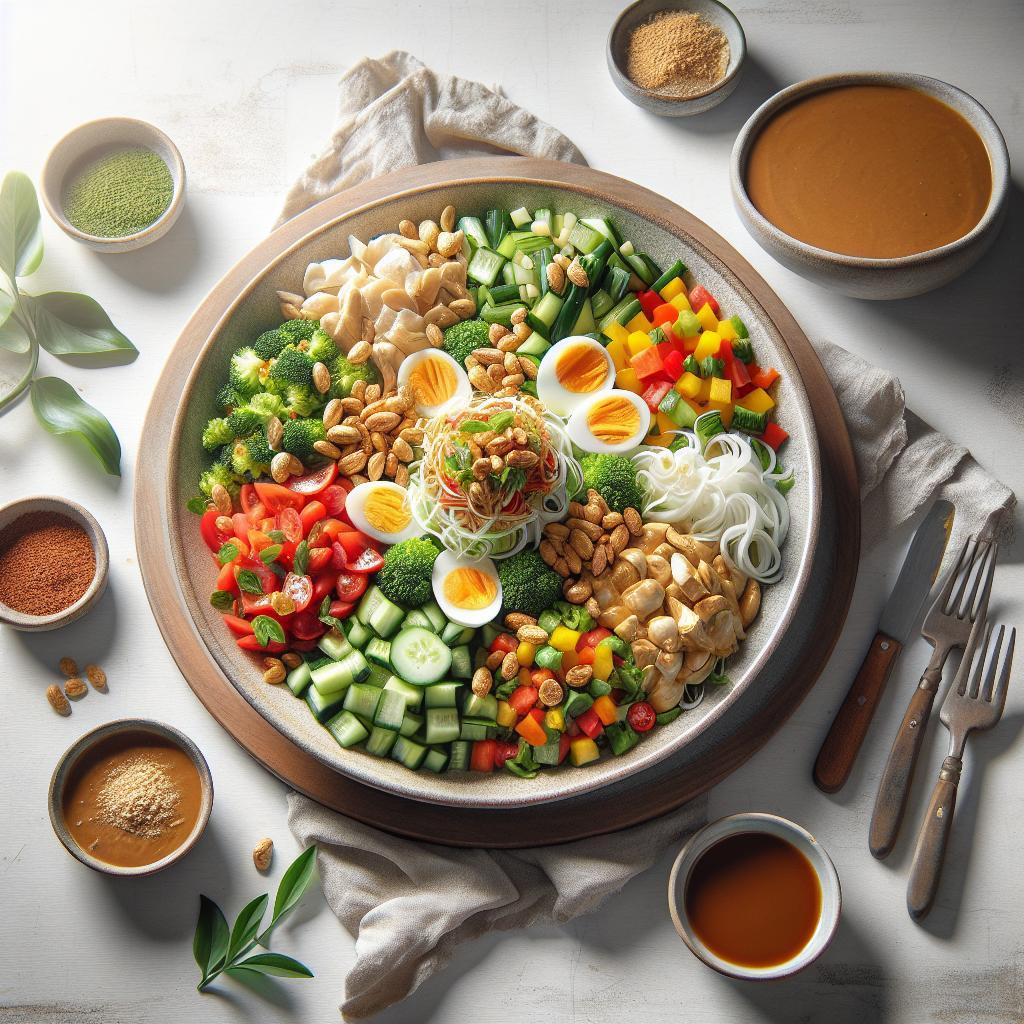
Serving gado-gado is an art – lay out the vegetables and proteins in colorful, distinct sections before drizzling the peanut sauce generously over the top or serving it alongside for dipping. The salad truly shines when paired with crunchy krupuk and a squeeze of fresh lime, which cuts through the sauce’s richness and brightens every mouthful. Enjoying gado-gado is about more than flavor; it’s about texture and balance-soft potatoes, fresh crisp veggies, creamy peanut sauce, and crunchy crackers all coming together harmoniously.
Prep and Cook Time
- Preparation: 25 minutes
- Cooking: 20 minutes
- Total: 45 minutes
Yield
Serves 4 generous portions
Difficulty Level
Medium – Requires moderate prep but rewarding to master
Ingredients
- 1 cup roasted peanuts, unsalted
- 2 cloves garlic, peeled
- 2 bird’s eye chilies, adjust for heat preference
- 2 tbsp palm sugar (or dark brown sugar)
- 1 tbsp tamarind paste
- 1 tsp salt
- 150 ml warm water
- 1 tbsp soy sauce or kecap manis
- Juice of 1 lime
- 300 g long beans, trimmed and blanched
- 2 medium potatoes, peeled, boiled, and cubed
- 150 g cucumber, peeled and sliced
- 150 g cabbage, shredded and blanched
- 100 g bean sprouts, rinsed
- 200 g firm tofu, diced and fried
- 200 g tempeh, sliced and fried
- 4 hard-boiled eggs, quartered
- Krupuk (Indonesian crackers), for serving
- Lime wedges, for garnish
Instructions
- Prepare the peanut sauce: In a food processor or mortar and pestle, grind the roasted peanuts until finely chopped but still textured. Add garlic, chilies, palm sugar, tamarind paste, and salt, then pulse until blended.
- Add warm water gradually while continuing to pulse until silky smooth. Adjust consistency by adding more water if needed.
- Stir in soy sauce and lime juice to balance the flavors, tasting carefully to achieve the perfect sweet, tangy, and salty harmony.
- Prepare vegetables and proteins: Blanch long beans, cabbage, and bean sprouts in boiling water for 1-2 minutes then drain and set aside to cool.
- Boil potatoes until tender but firm; drain and cube them.
- Fry tofu and tempeh in hot oil until golden and crispy, about 4 minutes per side; drain on paper towels.
- Assemble the gado-gado salad: On a large serving platter, arrange the cucumber slices, long beans, bean sprouts, cabbage, potato cubes, tofu, tempeh, and hard-boiled egg quarters in neat sections or artfully scattered for a vibrant presentation.
- Drizzle the peanut sauce generously over everything or serve it on the side for dipping. Sprinkle with crushed peanuts if desired.
- Garnish with lime wedges and serve immediately with krupuk crackers to add delightful crunch.
Chef’s Notes and Tips for Success
- For a smoky depth, lightly toast the peanuts again before grinding.
- If you prefer a vegetarian or vegan option, omit eggs and use tamari instead of soy sauce to keep it gluten-free.
- Adjust chili amounts to your heat tolerance-start small and build up.
- The peanut sauce thickens as it cools; gently rewarm with a splash of water before serving if needed.
- Make the peanut sauce ahead and refrigerate for up to 3 days to allow flavors to intensify.
Serving Suggestions
Serve gado-gado fresh and vibrant. Add colorful garnishes like freshly chopped green onions, fried shallots, or a sprinkle of coriander leaves to enhance visual appeal. Pair the salad with jasmine rice or lontong (compressed rice cakes) for a traditional Indonesian meal experience. Present with crispy krupuk on the side, perfect for dipping or adding an irresistible crunch.

| Nutrient | Per Serving |
|---|---|
| Calories | 450 kcal |
| Protein | 18 g |
| Carbohydrates | 35 g |
| Fat | 22 g |
For more inspiration, explore our Indonesian cuisine guides and dive deeper into the world of Southeast Asian flavors. To understand the cultural symbolism behind peanut sauce and regional variations, visit Britannica’s overview of Indonesian cuisine.
Q&A
Q&A: Gado-Gado Delight – Indonesia’s Iconic Salad with Peanut Sauce
Q1: What exactly is Gado-Gado?
A1: Gado-Gado is a vibrant Indonesian salad that’s a feast for both the eyes and the taste buds. It combines a colorful array of boiled and fresh vegetables, tofu, tempeh, and sometimes boiled eggs, all lovingly coated in a rich, creamy peanut sauce that dances with sweet, salty, and tangy notes.
Q2: Why is Gado-Gado considered iconic in Indonesia?
A2: Gado-Gado holds a special place in Indonesian cuisine not only because of its unique flavor harmony but also due to its cultural significance. It’s often enjoyed as an everyday meal and as a celebration dish, symbolizing unity with its blend of diverse ingredients coming together perfectly-much like Indonesia’s rich cultural tapestry.
Q3: What vegetables typically go into Gado-Gado?
A3: The vegetable lineup is as dynamic as Indonesia itself, usually including boiled potatoes, long beans, spinach, bean sprouts, cucumber, cabbage, and sometimes lontong (rice cakes). Each adds a layer of texture and freshness that balances the dense peanut sauce.
Q4: What makes the peanut sauce in Gado-Gado so special?
A4: The peanut sauce is the soul of Gado-Gado-it’s made from roasted peanuts ground into a luscious paste, mixed with palm sugar, tamarind, garlic, chili, and a hint of lime juice. This combination creates a complex, irresistible flavor that is sweet, nutty, spicy, and slightly sour all at once.
Q5: Is Gado-Gado healthy?
A5: Absolutely! Gado-Gado is a nutrient-packed dish, loaded with fresh vegetables, protein-rich tofu and tempeh, and heart-healthy peanuts. It’s naturally gluten-free and vegetarian-friendly, making it a wholesome option that doesn’t skimp on flavor.
Q6: Can Gado-Gado be customized?
A6: Definitely! One of Gado-Gado’s charms lies in its flexibility. You can mix and match vegetables, adjust the level of spice in the peanut sauce, or even add boiled eggs or fried tempeh to suit your palate. Each rendition tells its own story.
Q7: How is Gado-Gado traditionally served?
A7: Traditionally, Gado-Gado is arranged artfully on a plate, with vegetables neatly planted and generously draped in peanut sauce. It’s often served with krupuk (crispy crackers) on the side for an added crunch and sometimes a dash of fried shallots or sambal for an extra kick.
Q8: Where can someone try authentic Gado-Gado outside Indonesia?
A8: Thanks to its growing international popularity, Gado-Gado has found a home in many Southeast Asian and Indonesian restaurants worldwide. Seeking out eateries specializing in Indonesian cuisine or exploring local Asian food markets will often lead you to this delightful salad.
Q9: Any tips for making Gado-Gado at home?
A9: Start with fresh, crisp vegetables and don’t rush the peanut sauce-it’s worth roasting the peanuts yourself for maximum flavor. Balance is key: taste and tweak the sauce as you go, and serve immediately so the crunch and freshness of the ingredients shine through. Pair it with jasmine rice or simply enjoy it as a standalone dish.
Q10: What makes eating Gado-Gado an experience rather than just a meal?
A10: Eating Gado-Gado is like savoring a piece of Indonesia’s soul-each bite connects you to the country’s warmth, diversity, and culinary creativity. The medley of textures and flavors invites you to slow down and celebrate simplicity elevated to art. It’s comfort, culture, and delight all on one plate.
Wrapping Up
As the final forkful of gado-gado melts into a symphony of crunchy vegetables, fragrant herbs, and rich peanut sauce, it becomes clear why this Indonesian salad has captured hearts across generations. More than just a dish, gado-gado is a vibrant tapestry of culture, tradition, and communal joy-offering a delicious glimpse into the archipelago’s culinary soul. Whether you savor it at a bustling street market or craft your own version at home, gado-gado invites you to embrace a flavor experience that is at once simple, nourishing, and unforgettable. So next time hunger calls, remember: sometimes, the best way to explore a culture is one colorful bite at a time.